Friday, January 27, 2017

2017 - New titles smorgasbord vol 3


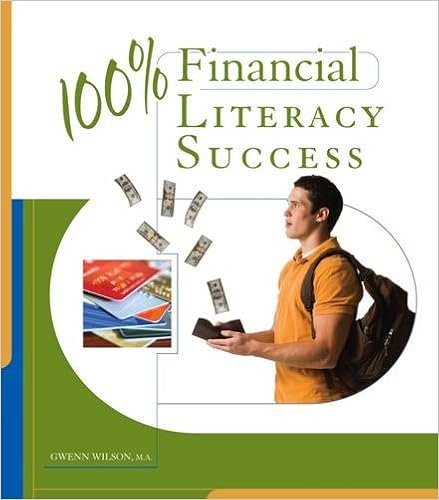
100% Financial Literacy Success

100% FINANCIAL LITERACY SUCCESS helps students develop the basic knowledge and skills necessary to manage their personal finances during college and beyond. Topics including personal banking, financial aid, budgeting, credit cards, and taxes are introduced through case studies to help students understand the real-world applications and begin to think critically about the role of these concepts in their own lives. Throughout the text, individual, group, and online exercises encourage students to explore and apply skills from the text, helping them create a pathway for long-term financial success.
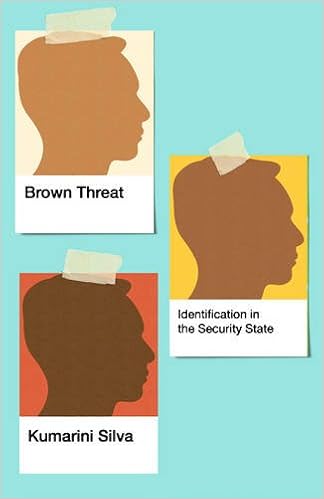


Brown threat

What is “brown” in—and beyond—the context of American identity politics? How has the concept changed since 9/11? In the most sustained examination of these questions to date, Kumarini Silva argues that “brown” is no longer conceived of solely as a cultural, ethnic, or political identity. Instead, after 9/11, the Patriot Act, and the wars in Iran, Iraq, and Afghanistan, it has also become a concept and, indeed, a strategy of identification—one rooted in xenophobic, imperialistic, and racist ideologies to target those who do not neatly fit or subscribe to ideas of nationhood. 
Interweaving personal narratives, ethnographic research, analyses of popular events like the Miss America pageant, and films and TV shows such as the Harold and Kumar franchise and Black-ish, Silva maps junctures where the ideological, political, and mediated terrain intersect, resulting in an appetite for all things “brown” (especially South Asian brown) by U.S. consumers, while political and nationalist discourses and legal structures (immigration, emigration, migration, outsourcing, incarceration) conspire to control brown bodies both within and outside the United States. 
Silva explores this contradictory relationship between representation and reality, arguing that the representation mediates and manages the anxieties that come from contemporary global realities, in which brown spaces, like India, Pakistan, and the Middle East pose key economic, security, and political challenges to the United States. While racism is hardly new, what makes this iteration of brown new is that anyone or any group, at any time, can be branded as deviant, as a threat. 

Majoring in psych?

Focusing on the multiple ways that students can enhance their marketability while still in school, Majoring in Psych?: Career Options for Psychology Undergraduates, 5/e answers the career-planning questions most psychology majors find themselves asking.This student-friendly guide looks at psychology as both a discipline and a liberal arts degree from a career perspective. The authors have compiled information to help students demystify the process of career development. Using a question-and-answer format, this valuable resource shows students how they can take an early and active role in shaping their professional paths. The humorous, down-to-earth tone makes this book accessible to all students.
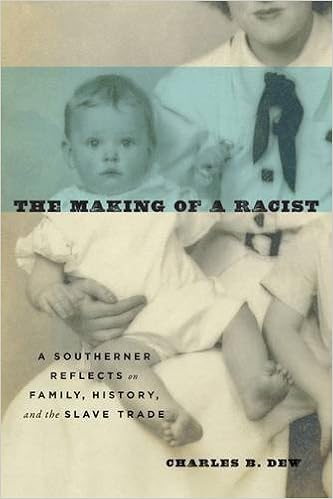


The making of a racist

In this powerful memoir, Charles Dew, one of America’s most respected historians of the South--and particularly its history of slavery--turns the focus on his own life, which began not in the halls of enlightenment but in a society unequivocally committed to segregation.
Dew re-creates the midcentury American South of his childhood--in many respects a boy’s paradise, but one stained by Lost Cause revisionism and, worse, by the full brunt of Jim Crow. Through entertainments and "educational" books that belittled African Americans, as well as the living examples of his own family, Dew was indoctrinated in a white supremacy that, at best, was condescendingly paternalistic and, at worst, brutally intolerant. The fear that southern culture, and the "hallowed white male brotherhood," could come undone through the slightest flexibility in the color line gave the Jim Crow mindset its distinctly unyielding quality. Dew recalls his father, in most regards a decent man, becoming livid over a black tradesman daring to use the front, and not the back, door.
The second half of the book shows how this former Confederate youth and descendant of Thomas Roderick Dew, one of slavery’s most passionate apologists, went on to reject his racist upbringing and become a scholar of the South and its deeply conflicted history. The centerpiece of Dew’s story is his sobering discovery of a price circular from 1860--an itemized list of humans up for sale. Contemplating this document becomes Dew’s first step in an exploration of antebellum Richmond’s slave trade that investigates the terrible--but, to its white participants, unremarkable--inhumanity inherent in the institution.
Dew’s wish with this book is to show how the South of his childhood came into being, poisoning the minds even of honorable people, and to answer the question put to him by Illinois Browning Culver, the African American woman who devoted decades of her life to serving his family: "Charles, why do the grown-ups put so much hate in the children?"
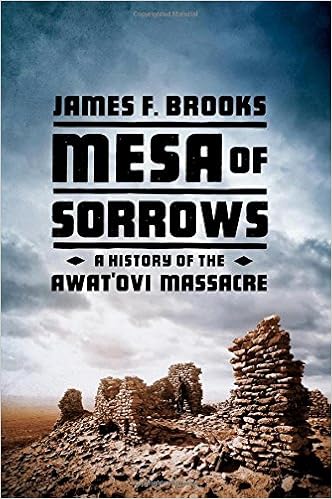
Mesa of sorrows
The Hopi community of Awat’ovi existed peacefully on Arizona’s Antelope Mesa for generations until one bleak morning in the fall of 1700―raiders from nearby Hopi villages descended on Awat’ovi, slaughtering their neighboring men, women, and children. While little of the pueblo itself remains, five centuries of history lie beneath the low rises of sandstone masonry, and theories about the events of that night are as persistent as the desert winds. The easternmost town on Antelope Mesa, Awat’ovi was renowned for its martial strength, and had been the gateway to the entire Hopi landscape for centuries. Why did kinsmen target it for destruction?
Drawing on oral traditions, archival accounts, and extensive archaeological research, James Brooks unravels the story and its significance. Mesa of Sorrows follows the pattern of an archaeological expedition, uncovering layer after layer of evidence and theories. Brooks questions their reliability and shows how interpretations were shaped by academic, religious and tribal politics. Piecing together three centuries of investigation, he offers insight into why some were spared―women, mostly, and taken captive―and others sacrificed. He weighs theories that the attack was in retribution for Awat’ovi having welcomed Franciscan missionaries or for the residents’ practice of sorcery, and argues that a perfect storm of internal and external crises revitalized an ancient cycle of ritual bloodshed and purification.
A haunting account of a shocking massacre, Mesa of Sorrows is a probing exploration of how societies confront painful histories, and why communal violence still plagues us today.
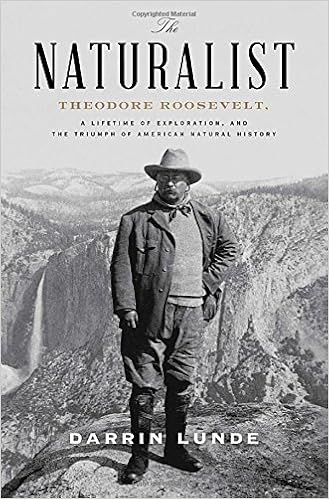


The naturalist: Theodore Roosevelt

No U.S. president is more popularly associated with nature and wildlife than is Theodore Roosevelt—prodigious hunter, tireless adventurer, and ardent conservationist. We think of him as a larger-than-life original, yet in The Naturalist, Darrin Lunde has firmly situated Roosevelt’s indomitable curiosity about the natural world in the tradition of museum naturalism.  As a child, Roosevelt actively modeled himself on the men (including John James Audubon and Spencer F. Baird) who pioneered this key branch of biology by developing a taxonomy of the natural world—basing their work on the experiential study of nature. The impact that these scientists and their trailblazing methods had on Roosevelt shaped not only his audacious personality but his entire career, informing his work as a statesman and ultimately affecting generations of Americans’ relationship to this country’s wilderness.

Drawing on Roosevelt’s diaries and travel journals as well as Lunde’s own role as a leading figure in museum naturalism today, The Naturalist reads Roosevelt through the lens of his love for nature. From his teenage collections of birds and small mammals to his time at Harvard and political rise, Roosevelt’s fascination with wildlife and exploration culminated in his triumphant expedition to Africa, a trip which he himself considered to be the apex of his varied life. With narrative verve, Lunde brings his singular experience to bear on our twenty-sixth president’s life and constructs a perceptively researched and insightful history that tracks Roosevelt’s maturation from exuberant boyhood hunter to vital champion of serious scientific inquiry.


A new history of Asian America

A New History of Asian America is a fresh and up-to-date history of Asians in the United States from the late eighteenth century to the present. Drawing on current scholarship, Shelley Lee brings forward the many strands of Asian American history, highlighting the distinctive nature of the Asian American experience while placing the narrative in the context of the major trajectories and turning points of U.S. history. Covering the history of Filipinos, Koreans, Asian Indians, and Southeast Indians as well as Chinese and Japanese, the book gives full attention to the diversity within Asian America. A robust companion website features additional resources for students, including primary documents, a timeline, links, videos, and an image gallery.
From the building of the transcontinental railroad to the celebrity of Jeremy Lin, people of Asian descent have been involved in and affected by the history of America. A New History of Asian America gives twenty-first-century students a clear, comprehensive, and contemporary introduction to this vital history.
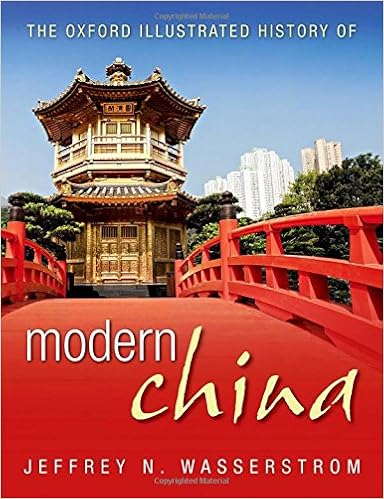

Modern China

This lavishly illustrated volume explores the history of China during a period of dramatic shifts and surprising transformations, from the founding of the Qing Dynasty (1644-1912) through to the present day.

The Oxford Illustrated History of Modern China promises to be essential reading for anyone who wants to understand this rising superpower on the verge of what promises to be the 'Chinese century,' introducing readers to important but often overlooked events in China's past, such as the bloody Taiping Civil War (1850-1864), which had a death toll far higher than the roughly contemporaneous American Civil War. It also helps readers see more familiar landmarks in Chinese history in new ways, such as the Opium War (1839-1842), the Boxer Uprising of 1900, the rise to power of the Chinese Communist Party in 1949, and the Tiananmen protests and Beijing Massacre of 1989.

This is one of the first major efforts - and in many ways the most ambitious to date - to come to terms with the broad sweep of modern Chinese history, taking readers from the origins of modern China right up through the dramatic events of the last few years (the Beijing Games, the financial crisis, and China's rise to global economic pre-eminence) which have so fundamentally altered Western views of China and China's place in the world.
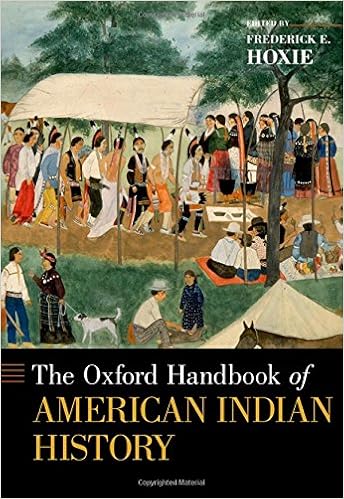

Oxford handbook of American Indian history

"Everything you know about Indians is wrong." As the provocative title of Paul Chaat Smith's 2009 book proclaims, everyone knows about Native Americans, but most of what they know is the fruit of stereotypes and vague images. The real people, real communities, and real events of indigenous America continue to elude most people. The Oxford Handbook of American Indian History confronts this erroneous view by presenting an accurate and comprehensive history of the indigenous peoples who lived-and live-in the territory that became the United States.

Thirty-two leading experts, both Native and non-Native, describe the historical developments of the past 500 years in American Indian history, focusing on significant moments of upheaval and change, histories of indigenous occupation, and overviews of Indian community life. The first section of the book charts Indian history from before 1492 to European invasions and settlement, analyzing US expansion and its consequences for Indian survival up to the twenty-first century. A second group of essays consists of regional and tribal histories. The final section illuminates distinctive themes of Indian life, including gender, sexuality and family, spirituality, art, intellectual history, education, public welfare, legal issues, and urban experiences. A much-needed and eye-opening account of American Indians, this Handbook unveils the real history often hidden behind wrong assumptions, offering stimulating ideas and resources for new generations to pursue research on this topic.
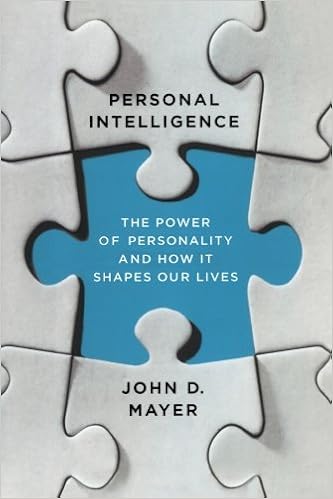


Personal intelligence

In Personal Intelligence, Mayer explains that we are naturally curious about the motivations and inner worlds of the people we interact with every day. Some of us are talented at perceiving what makes our friends, family, and coworkers tick. Some of us are less so. Mayer reveals why, and shows how the most gifted "readers" among us have developed "high personal intelligence." Mayer's theory of personal intelligence brings together a diverse set of findings―previously regarded as unrelated―that show how much variety there is in our ability to read other people's faces; to accurately weigh the choices we are presented with in relationships, work, and family life; and to judge whether our personal life goals conflict or go together well. He persuasively argues that our capacity to problem-solve in these varied areas forms a unitary skill. 
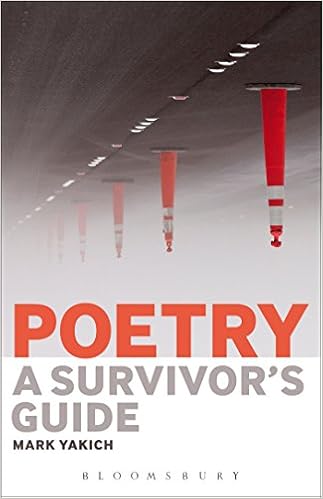


Poetry: a survivor's guide

Playful and serious, unforgiving and compassionate, Poetry: A Survivor's Guide offers an original take on a subject both loved and feared. In a series of provocative and inspiring propositions, the act of reading a poem is made new, and the act of writing one is made over. Questions of poetry's difficulty, pretension, and relevance are explored with insight and daring. In an age of new media and social networking, this handbook-cum-manifesto provides fresh reverence for one of our oldest forms of art.
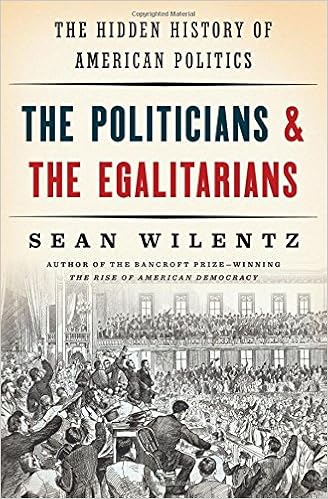


The politicians and the egalitarians

“There are two keys to unlocking the secrets of American politics and American political history.” So begins The Politicians & the Egalitarians, Princeton historian Sean Wilentz’s bold new work of history.
First, America is built on an egalitarian tradition. At the nation’s founding, Americans believed that extremes of wealth and want would destroy their revolutionary experiment in republican government. Ever since, that idea has shaped national political conflict and scored major egalitarian victories―from the Civil War and Progressive eras to the New Deal and the Great Society―along the way.
Second, partisanship is a permanent fixture in America, and America is the better for it. Every major egalitarian victory in United States history has resulted neither from abandonment of partisan politics nor from social movement protests but from a convergence of protest and politics, and then sharp struggles led by principled and effective party politicians. There is little to be gained from the dream of a post-partisan world.
With these two insights Sean Wilentz offers a crystal-clear portrait of American history, told through politicians and egalitarians including Thomas Paine, Abraham Lincoln, and W. E. B. Du Bois―a portrait that runs counter to current political and historical thinking. As he did with his acclaimed The Rise of American Democracy, Wilentz once again completely transforms our understanding of this nation’s political and moral character.
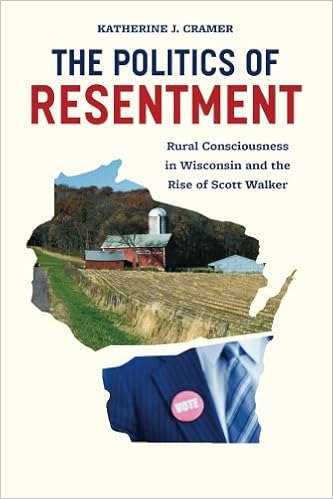


The politics of resentment

Since the election of Scott Walker, Wisconsin has been seen as ground zero for debates about the appropriate role of government in the wake of the Great Recession. In a time of rising inequality, Walker not only survived a bitterly contested recall that brought thousands of protesters to Capitol Square, he was subsequently reelected. How could this happen? How is it that the very people who stand to benefit from strong government services not only vote against the candidates who support those services but are vehemently against the very idea of big government?
With The Politics of Resentment, Katherine J. Cramer uncovers an oft-overlooked piece of the puzzle: rural political consciousness and the resentment of the "liberal elite". Rural voters are distrustful that politicians will respect the distinct values of their communities and allocate a fair share of resources. What can look like disagreements about basic political principles are therefore actually rooted in something even more fundamental: who we are as people and how closely a candidate's social identity matches our own. Using Scott Walker and Wisconsin's prominent and protracted debate about the appropriate role of government, Cramer illuminates the contours of rural consciousness, showing how place-based identities profoundly influence how people understand politics, regardless of whether urban politicians and their supporters really do shortchange or look down on those living in the country. The Politics of Resentment shows that rural resentment;no less than partisanship, race, or class -- plays a major role in dividing America against itself.
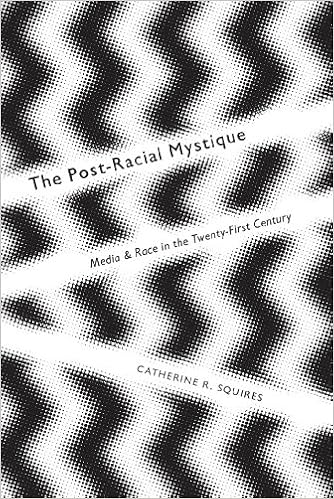


The post-racial mystique

Despite claims from pundits and politicians that we now live in a post-racial America, people seem to keep finding ways to talk about race—from celebrations of the inauguration of the first Black president to resurgent debates about police profiling, race and racism remain salient features of our world. When faced with fervent anti-immigration sentiments, record incarceration rates of Blacks and Latinos, and deepening socio-economic disparities, a new question has erupted in the last decade: What does being post-racial mean?
The Post-Racial Mystique explores how a variety of media—the news, network television, and online, independent media—debate, define and deploy the term “post-racial” in their representations of American politics and society. Using examples from both mainstream and niche media—from prime-time television series to specialty Christian media and audience interactions on social media—Catherine Squires draws upon a variety of disciplines including communication studies, sociology, political science, and cultural studies in order to understand emergent strategies for framing post-racial America. She reveals the ways in which media texts cast U.S. history, re-imagine interpersonal relationships, employ statistics, and inventively redeploy other identity categories in a quest to formulate different ways of responding to race.


Qualitative data analysis with NVIVO


This straightforward, jargon-free book provides an invaluable introduction to planning and conducting qualitative data analysis with NVivo. Written by leading authorities, with over 40 years combined experience in computer-assisted analysis of qualitative and mixed-mode data, the new edition of this best selling textbook is an ideal mix of practical instruction, methodology and real world examples.
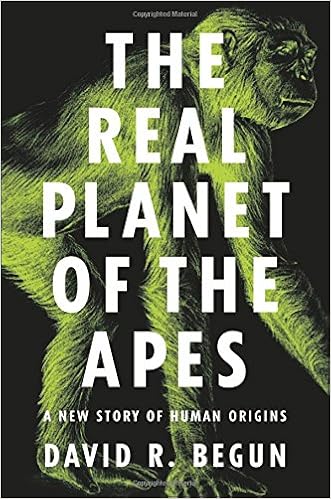


The real planet of the apes

Was Darwin wrong when he traced our origins to Africa? The Real Planet of the Apes makes the explosive claim that it was in Europe, not Africa, where apes evolved the most important hallmarks of our human lineage--such as dexterous hands and larger brains. In this compelling and accessible book, David Begun, one of the world's leading paleoanthropologists, transports readers to an epoch in the remote past when the Earth was home to many migratory populations of ape species.
Drawing on the latest astonishing discoveries in the fossil record as well as his own experiences conducting field expeditions across Europe and Asia, Begun provides a sweeping evolutionary history of great apes and humans. He tells the story of how one of the earliest members of our evolutionary group--a new kind of primate called Proconsul--evolved from lemur-like monkeys in the primeval forests of Africa. Begun vividly describes how, over the next 10 million years, these hominoids expanded into Europe and Asia and evolved climbing and hanging adaptations, longer maturation times, and larger brains, setting the stage for the emergence of humans. As the climate deteriorated in Europe around 10 million years ago, these apes either died out or migrated south, reinvading the African continent and giving rise to the lineages of the gorilla, chimpanzee, and, ultimately, the human.
Presenting startling new insights about our fossil ape ancestors, The Real Planet of the Apes is a book that fundamentally alters our understanding of human origins.


2017: New titles smorgasbord vol 2


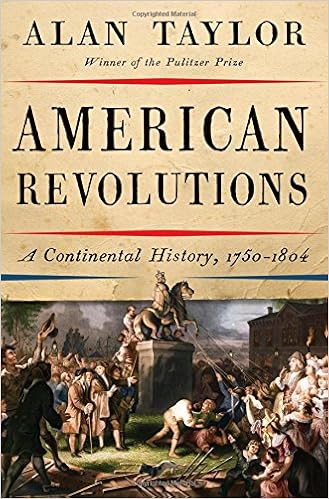
American Revolutions

From the two-time Pulitzer Prize winner, a fresh, authoritative history that recasts our thinking about America’s founding period.
The American Revolution is often portrayed as a high-minded, orderly event whose capstone, the Constitution, provided the ideal framework for a democratic, prosperous nation. Alan Taylor, two-time winner of the Pulitzer Prize, gives us a different creation story in this magisterial history of the nation’s founding.
Rising out of the continental rivalries of European empires and their native allies, Taylor’s Revolution builds like a ground fire overspreading Britain’s mainland colonies, fueled by local conditions, destructive, hard to quell. Conflict ignited on the frontier, where settlers clamored to push west into Indian lands against British restrictions, and in the seaboard cities, where commercial elites mobilized riots and boycotts to resist British tax policies. When war erupted, Patriot crowds harassed Loyalists and nonpartisans into compliance with their cause. Brutal guerrilla violence flared all along the frontier from New York to the Carolinas, fed by internal divisions as well as the clash with Britain. Taylor skillfully draws France, Spain, and native powers into a comprehensive narrative of the war that delivers the major battles, generals, and common soldiers with insight and power.

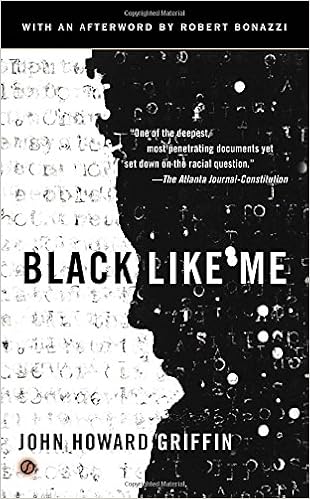
Black Like Me
In the Deep South of the 1950s, journalist John Howard Griffin decided to cross the color line.  Using medication that darkened his skin to deep brown, he exchanged his privileged life as a Southern white man for the disenfranchised world of an unemployed black man.  His audacious, still chillingly relevant eyewitness history is a work about race and humanity-that in this new millennium still has something important to say to every American.

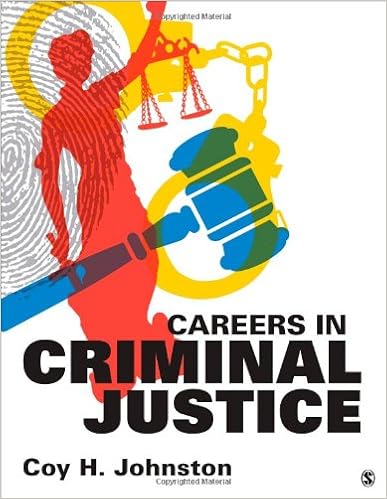
Careers in Criminal Justice
Coy H. Johnston’s concise, yet thorough and creative text, Careers in Criminal Justice, prepares students to plan, pursue, and realize their career goals—from conception through the hiring process. The book's contemporary approach emphasizes student self-reflection and pragmatism in the pursuit of self-fulfillment and happiness. With coverage of over forty careers in policing, courts, corrections, and victims services, this text provides a comprehensive overview of the most popular and growing careers in the field. Readers are provided self assessment tools to enhance self awareness and steer them toward realistic and suitable careers in criminal justice. 

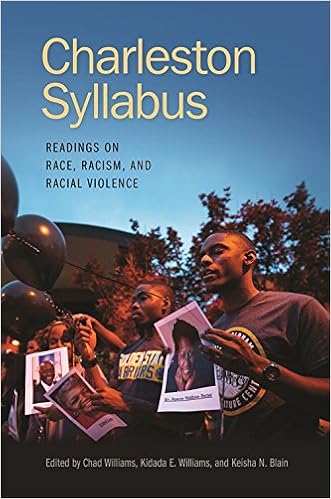
Charleston Syllabus
This thoroughly remarkable compendium of works about African-American life, edited by the three history professors who started the #CharlestonSyllabus Twitter hashtag, offers solid ground for the oft-requested national conversation about race. Their work firmly connects the dots among slavery, white terror organizations, the Confederate battle flag, and the murders of eight African-American Bible study members in Charleston, S.C., in 2015. . . . This solid offshoot of the original online syllabus (a blockbuster bibliographic tool that’s also included in this volume) is simply a must-read, both for those already versed in these topics and those just getting started. (Publishers Weekly (starred review))

Cuba and the US empire
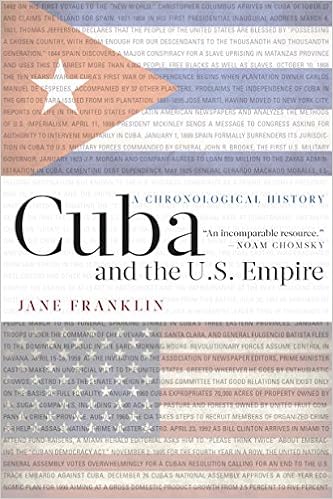
In this updated edition of her classic, Cuba and the United States: A Chronological History, Jane Franklin depicts the two countries’ relationship from the time both were colonies to the present. We see the early connections between Cuba and the United States through slavery; through the sugar trade; then Cuba’s multiple wars for national liberation; the annexation of Cuba by the United States; the infamous Platt Amendment that entitled the United States to intervene directly in Cuban affairs; the gangster capitalism promoted by Cuban dictator Fulgencio Battista; and the guerilla war that brought the revolutionaries to power.A new chapter updating the fraught Cuban-U.S. nexus brings us well into the 21st century, with a look at the current status of Assata Shakur, the Cuban Five, and the post-9/11 years leading to the expansion of diplomatic relations. Offering a range of primary and secondary sources, the book is an outstanding scholarly work. Cuba and the United States brings new meaning to Simón Bolívar’s warning in 1829, that the United States “appears destined by Providence to plague America with miseries in the name of Freedom.”

Essential documents of American history
Vol 1
This compact volume offers a broad selection of the most important documents in American history: the Declaration of Independence, the Constitution, and the Emancipation Proclamation as well as presidential speeches, Supreme Court decisions, Acts and Declarations of Congress, essays, letters, and much more. 

Vol 2
This compact volume offers a broad selection of the most important documents in American history: the Nineteenth Amendment to the Constitution, which ratified women's right to vote; the Supreme Court's decision on Brown v. Board of Education; and the "Heroism and Horror" portion of the 9/11 Commission Report; as well as presidential speeches, Acts and Declarations of Congress, essays, letters, and much more.


Exploring and understanding careers in criminal justice
Criminal justice careers typically fall into one of two categories: law enforcement or legal. But contrary to what many may know about the career opportunities in criminal justice, it is more than just becoming a cop or a lawyer. In Exploring and Understanding Careers and Opportunities in Criminal Justice, Matthew J. Sheridan and Raymond R. Rainville provide a practical, comprehensive guide that easily explains the extensive operations and the scope of employment possibilities and opportunities in the criminal justice profession. They cover many criminal justice functions and career paths that are seldom discussed when preparing for a career in criminal justice. Rainville and Sheridan focus on how to obtain employment in a career field that fits personal strengths and aspirations and emphasize the value of internships and service learning as tools to obtain the desired position.

A career in criminal justice is a process of many potential outcomes. The career professional who plans, continues personal development, and prepares their career path will discover many potential rewards that include satisfaction during and after their career. The field of criminal justice will continue to expand and grow. Legislative mandates will promote new policies and employment opportunities to keep pace with changes and improvements in criminal justice practices to meet needs that enable the career professional to protect and serve. As the title suggests, anyone interested in exploring and understanding the field of criminal justice and the opportunities it can provide needs to read this book. Sheridan and Rainville make it known that there are more options in the field of criminal justice than you thought, and that the process for obtaining employment and developing the career path you desire most can be done!

Extreme killing
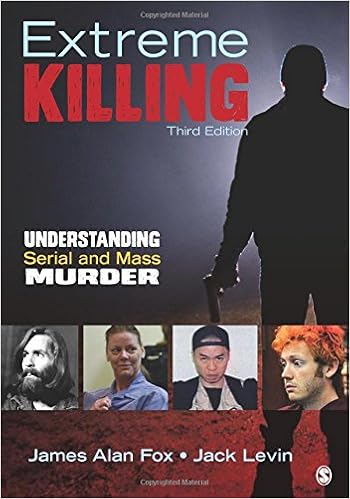
Filled with contemporary and classic case studies, this fascinating overview of both serial and mass murder illustrates the many violent expressions of power, revenge, terror, greed, and loyalty. Throughout the book, renowned experts James Alan Fox and Jack Levin examine the theories of criminal behavior and apply them to a multitude of mass and serial murderers from around the world, such as Adam Lanza (Newtown, CT), James Holmes (Aurora, CO cinema), Anders Breivik (Oslo, Norway), Charles Manson (“Helter Skelter”), and Dennis Rader (BTK). This fully updated Third Edition of Extreme Killing helps readers understand the commonalities and variations among multiple murders, addresses the characteristics of both killers and their victims, and, in the concluding chapter, discusses the special concerns of multiple murder victims and their survivors.

The fractured republic
In The Fractured Republic, Yuval Levin argues that this politics of nostalgia is failing twenty-first-century Americans. Both parties are blind to how America has changed over the past half century--as the large, consolidated institutions that once dominated our economy, politics, and culture have fragmented and become smaller, more diverse, and personalized. Individualism, dynamism, and liberalization have come at the cost of dwindling solidarity, cohesion, and social order. This has left us with more choices in every realm of life but less security, stability, and national unity.

Both our strengths and our weaknesses are therefore consequences of these changes. And the dysfunctions of our fragmented national life will need to be answered by the strengths of our decentralized, diverse, dynamic nation.
Levin argues that this calls for a modernizing politics that avoids both radical individualism and a centralizing statism and instead revives the middle layers of society—families and communities, schools and churches, charities and associations, local governments and markets. Through them, we can achieve not a single solution to the problems of our age, but multiple and tailored answers fitted to the daunting range of challenges we face and suited to enable an American revival.

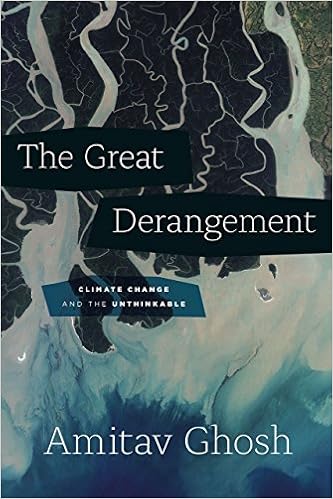
The great derangement
Are we deranged? The acclaimed Indian novelist Amitav Ghosh argues that future generations may well think so. How else to explain our imaginative failure in the face of global warming? In his first major book of nonfiction since In an Antique Land, Ghosh examines our inability—at the level of literature, history, and politics—to grasp the scale and violence of climate change.

The extreme nature of today’s climate events, Ghosh asserts, make them peculiarly resistant to contemporary modes of thinking and imagining. This is particularly true of serious literary fiction: hundred-year storms and freakish tornadoes simply feel too improbable for the novel; they are automatically consigned to other genres. In the writing of history, too, the climate crisis has sometimes led to gross simplifications; Ghosh shows that the history of the carbon economy is a tangled global story with many contradictory and counterintuitive elements.

Ghosh ends by suggesting that politics, much like literature, has become a matter of personal moral reckoning rather than an arena of collective action. But to limit fiction and politics to individual moral adventure comes at a great cost. The climate crisis asks us to imagine other forms of human existence—a task to which fiction, Ghosh argues, is the best suited of all cultural forms. His book serves as a great writer’s summons to confront the most urgent task of our time.

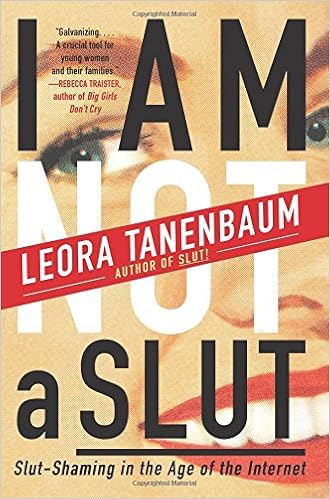
I am not a slut
The author of the groundbreaking work Slut! explores the phenomenon of slut-shaming in the age of sexting, tweeting, and “liking.” She shows that the sexual double standard is more dangerous than ever before and offers wisdom and strategies for alleviating its destructive effects on young women’s lives.
Young women are encouraged to express themselves sexually. Yet when they do, they are derided as “sluts.” Caught in a double bind of mixed sexual messages, young women are confused. To fulfill the contradictory roles of being sexy but not slutty, they create an “experienced” identity on social media-even if they are not sexually active—while ironically referring to themselves and their friends as “sluts.”
But this strategy can become a weapon used against young women in the hands of peers who circulate rumors and innuendo—elevating age-old slut-shaming to deadly levels, with suicide among bullied teenage girls becoming increasingly common. Now, Leora Tanenbaum revisits her influential work on sexual stereotyping to offer fresh insight into the digital and face-to-face worlds contemporary young women inhabit. She shares her new research, involving interviews with a wide range of teenage girls and young women from a variety of backgrounds as well as parents, educators, and academics. Tanenbaum analyzes the coping mechanisms young women currently use and points them in a new direction to eradicate slut-shaming for good.


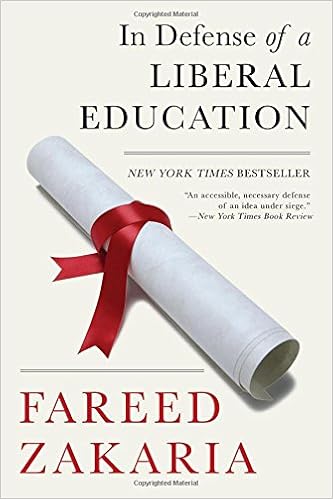
In defense of a liberal education

Zakaria eloquently expounds on the virtues of a liberal arts education―how to write clearly, how to express yourself convincingly, and how to think analytically. He turns our leaders' vocational argument on its head. American routine manufacturing jobs continue to get automated or outsourced, and specific vocational knowledge is often outdated within a few years. Engineering is a great profession, but key value-added skills you will also need are creativity, lateral thinking, design, communication, storytelling, and, more than anything, the ability to continually learn and enjoy learning―precisely the gifts of a liberal education.
Zakaria argues that technology is transforming education, opening up access to the best courses and classes in a vast variety of subjects for millions around the world. We are at the dawn of the greatest expansion of the idea of a liberal education in human history.


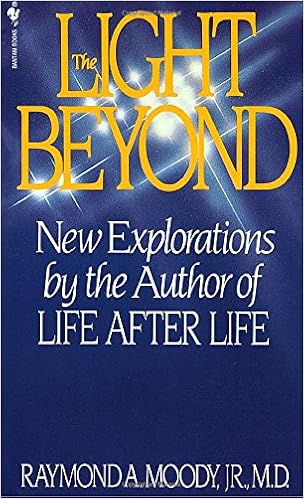
The light beyond

It has been a decade since the publication of Dr.  Moody's landmark bestseller, Life After  Life, and since he coined the term  "near-death experience", or NDE. Today, Dr.  Moody has studied more than a thousand new case  histories of adults and children who have clinically  reached the point of death and survived, and  extraordinary new research has revealed more patterns  of NDEs. Now, for the first time, Dr. Moody  presents this wealth of new information to the general  public information that uncovers secrets and opens  the doors to a powerful message of love from the  frontier between life and death. 


2017: New titles smorgasbord vol 1


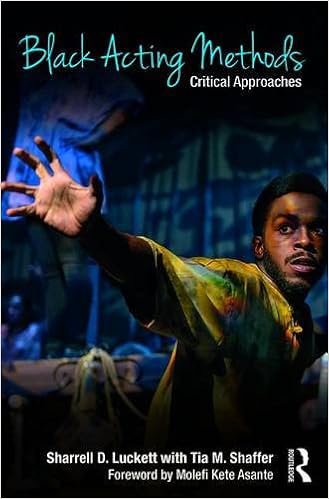
Black Acting Methods

Black Acting Methods seeks to offer alternatives to the Euro-American performance styles that many actors find themselves working with.
A wealth of contributions from directors, scholars and actor trainers address afrocentric processes and aesthetics, and interviews with key figures in Black American theatre illuminate their methods. This ground-breaking collection is an essential resource for teachers, students, actors and directors seeking to reclaim, reaffirm or even redefine the role and contributions of Black culture in theatre arts.


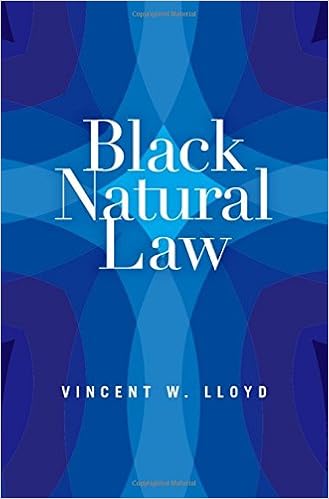
Black Natural Law

Black Natural Law offers a new way of understanding the African American political tradition. Iconoclastically attacking left (including James Baldwin and Audre Lorde), right (including Clarence Thomas and Ben Carson), and center (Barack Obama), Vincent William Lloyd charges that many Black leaders today embrace secular, white modes of political engagement, abandoning the deep connections between religious, philosophical, and political ideas that once animated Black politics. By telling the stories of Frederick Douglass, Anna Julia Cooper, W. E. B. Du Bois, and Martin Luther King, Jr., Lloyd shows how appeals to a higher law, or God's law, have long fueled Black political engagement. Such appeals do not seek to implement divine directives on earth; rather, they pose a challenge to the wisdom of the world, and they mobilize communities for collective action. Black natural law is deeply democratic: while charismatic leaders may provide the occasion for reflection and mobilization, all are capable of discerning the higher law using our human capacities for reason and emotion.


Dissecting the Hack

Dissecting the Hack: The V3rb0t3n Network ventures further into cutting-edge techniques and methods than its predecessor, Dissecting the Hack: The F0rb1dd3n Network. It forgoes the basics and delves straight into the action, as our heroes are chased around the world in a global race against the clock. The danger they face will forever reshape their lives and the price they pay for their actions will not only affect themselves, but could possibly shake the foundations of an entire nation.
The book is divided into two parts. The first part, entitled "The V3rb0t3n Network," continues the fictional story of Bob and Leon, two hackers caught up in an adventure in which they learn the deadly consequence of digital actions. The second part, "Security Threats Are Real" (STAR), focuses on these real-world lessons and advanced techniques, as used by characters in the story. This gives the reader not only textbook knowledge, but real-world context around how cyber-attacks may manifest.

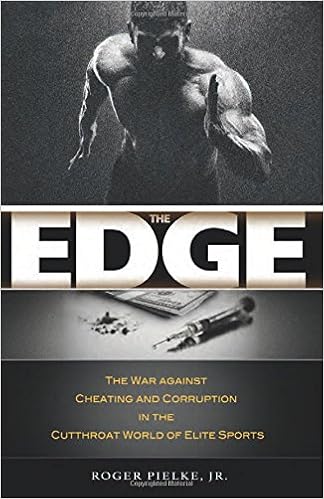
The Edge: the war against cheating and corruption in elite sports

Both entertaining and thought-provoking, THE EDGE not only visits the battlefields in the war against cheating and corruption, but also explores ways to ensure that “the spirit of sport” can survive in today’s high-tech, highly professional world.

Drawing on controversies straight out of the headlines, Pielke looks at doping, match fixing, fake amateurism, and other ways of breaking the rules. But are those rules--and the values they reflect--hopelessly outdated?

Wonderfully readable and scrupulously researched, THE EDGE blends science and journalism to produce an unforgettable account of sport in crisis.

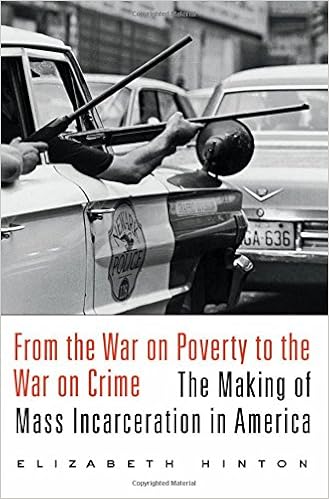
From the war on poverty to war on crime
 In the United States today, one in every thirty-one adults is under some form of penal control, including one in eleven African American men. How did the “land of the free” become the home of the world’s largest prison system? Challenging the belief that America’s prison problem originated with the Reagan administration’s War on Drugs, Elizabeth Hinton traces the rise of mass incarceration to an ironic source: the social welfare programs of Lyndon Johnson’s Great Society at the height of the civil rights era.
Johnson’s War on Poverty policies sought to foster equality and economic opportunity. But these initiatives were also rooted in widely shared assumptions about African Americans’ role in urban disorder, which prompted Johnson to call for a simultaneous War on Crime. The 1965 Law Enforcement Assistance Act empowered the national government to take a direct role in militarizing local police. Federal anticrime funding soon incentivized social service providers to ally with police departments, courts, and prisons. Under Richard Nixon and his successors, welfare programs fell by the wayside while investment in policing and punishment expanded. Anticipating future crime, policymakers urged states to build new prisons and introduced law enforcement measures into urban schools and public housing, turning neighborhoods into targets of police surveillance.
By the 1980s, crime control and incarceration dominated national responses to poverty and inequality. The initiatives of that decade were less a sharp departure than the full realization of the punitive transformation of urban policy implemented by Republicans and Democrats alike since the 1960s.


The future we want

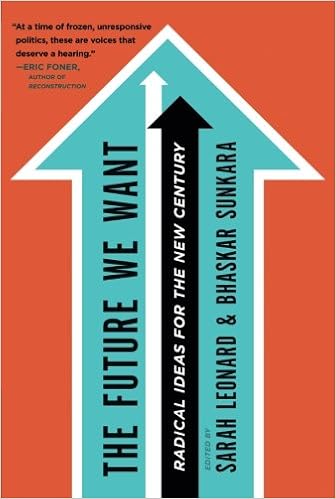
Democrat, Republican -- the list of presidential candidates confirms that business is proceeding pretty much as usual. The Future We Want proposes something different. In a sharp, rousing collective manifesto, ten young cultural and political critics dismantle the usual liberal solutions to America's ills and propose a pragmatic alternative.
What would finance look like without Wall Street? Or the workplace with responsibility shared by the entire workforce? From a campaign to limit work hours, to a program for full employment, to proposals for a new feminism, The Future We Want has the courage to think of alternatives that are both utopian and possible.
Brilliantly clear and provocative, The Future We Want -- edited by Jacobin magazine founder Bhaskar Sunkara and the Nation's Sarah Leonard -- harnesses the energy and creativity of an angry generation and announces the arrival of a new political left that not only protests but plans.


Ghengis Khan and the quest for God

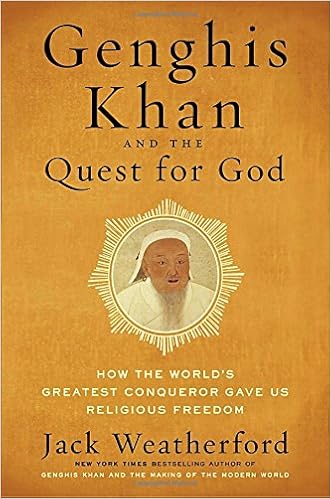
Throughout history the world's greatest conquerors have made their mark not just on the battlefield, but in the societies they have transformed. Genghis Khan conquered by arms and bravery, but he ruled by commerce and religion. He created the world's greatest trading network and drastically lowered taxes for merchants, but he knew that if his empire was going to last, he would need something stronger and more binding than trade. He needed religion. And so, unlike the Christian, Taoist and Muslim conquerors who came before him, he gave his subjects freedom of religion. Genghis lived in the 13th century, but he struggled with many of the same problems we face today: How should one balance religious freedom with the need to reign in fanatics? Can one compel rival religions - driven by deep seated hatred--to live together in peace? 


Global poverty

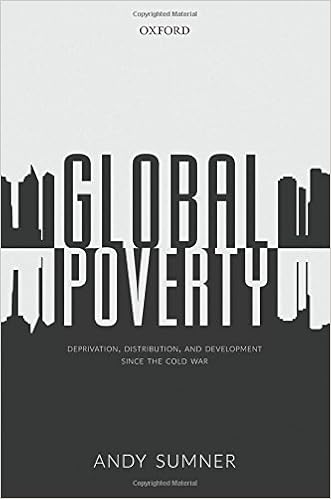
Why are some people poor? Why does absolute poverty persist despite substantial economic growth? What types of late economic development or 'catch-up' capitalism are associated with different poverty outcomes? Global Poverty addresses these apparently simple questions and the extent to which the answers may be shifting. One might expect global poverty to be focused in the world's poorest countries, usually defined as low-income countries, or least developed countries, or 'fragile states'. However, most of the world's absolute poor by monetary or multi-dimensional poverty - up to a billion people - live in growing and largely stable middle-income countries. At the same time, poverty has not fallen as much as the substantial economic growth would warrant. As a consequence, and as domestic resources have grown, much of global poverty has become less about a lack of domestic resources and more about questions of national inequality, social policy and welfare regimes, and patterns of economic development pursued.


God's Armies

Crusade and jihad are often reckoned to have represented two sides of the same coin: each resonated on the opposing sides in the holy wars of the Middle Ages and each has been invoked during the war on terror.

A chronicle of the Christian and Islamic struggle to control the sacred places of Palestine and the Middle East between the seventh and thirteenth centuries, this dynamic new history demonstrates that this simple opposition ignores crucial differences. Placing an equal emphasis on the inner histories of Christianity and Islam, the book traces the origins and development of crusade and jihad, showing for example that jihad reflected internal tensions in Islam from its beginnings. The narrative also reveals the ways in which crusade and jihad were used to disguise ambitions for power and to justify atrocity and yet also inspired acts of great chivalry and heroic achievement. The story brims with larger than life characters, among them Richard the Lionheart, Nur al-Din, Saladin, Baybars, and Ghengiz Khan.


The Koreas

Presenting a succinct, historically informed introduction to North and South Korea, the second edition of The Koreas considers the radically different ways these countries have dealt with the growing challenges of globalization. Since the first edition’s publication, the economic, political, and social differences have only intensified, making evident the relevancy and importance of Armstrong’s work, in understanding the Koreas now and in the future. Ultimately, The Koreas is a crisp, engaging primer of Korea and the Korean people in the contemporary world. This book is ideal for many courses in a variety of disciplines, including politics, history, international business, and Asian studies.


Lift

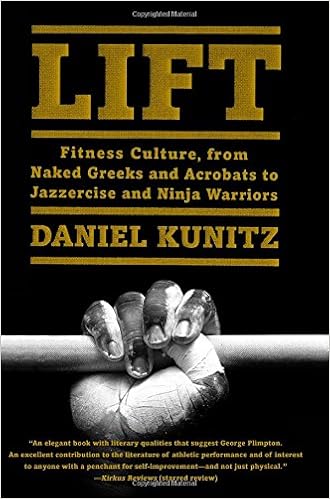
In this captivating narrative, Daniel Kunitz sets out on a journey through history to answer these questions and more. What he finds is that, while we humans have been conditioning our bodies for more than 2,500 years, we’ve done so for a variety of reasons: to imitate gods, to be great warriors, to build nations and create communities, to achieve physical perfection, and, of course, to look good naked. Behind each of these goals is a story and method of exercise that not only illuminates the past but also sheds light on aspects of the widespread, multi-faceted fitness culture of today.
Lift begins with the ancient Greeks, who made a cult of the human body—the word “gymnasium” derives from the Greek word for “naked”—and then takes us on an enlightening tour through time, following Asian martial artists, Persian pahlevans, nineteenth-century German gymnasts, and the bronzed bodies of California’s Muscle Beach. Kunitz uncovers the seeds of the modern gym in the late nineteenth-century with the invention of the first weightlifting machines, and brings us all the way up to the ultimate game-changer: the feminist movement, which kicked off the exercise boom of the 1970s with aerobics, and ultimately helped create the big-box gyms we know today.


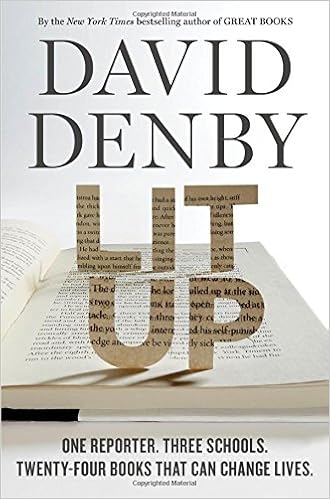
Lit Up
It's no secret that millions of American teenagers, caught up in social media, television, movies, and games, don't read seriously-they associate sustained reading with duty or work, not with pleasure. This indifference has become a grievous loss to our standing as a great nation--and a personal loss, too, for millions of teenagers who may turn into adults with limited understanding of themselves and the world.
Can teenagers be turned on to serious reading? What kind of teachers can do it, and what books? To find out, Denby sat in on a tenth-grade English class in a demanding New York public school for an entire academic year, and made frequent visits to a troubled inner-city public school in New Haven and to a respected public school in Westchester county. He read all the stories, poems, plays, and novels that the kids were reading, and creates an impassioned portrait of charismatic teachers at work, classroom dramas large and small, and fresh and inspiring encounters with the books themselves, including The Scarlet Letter, Brave New World, 1984, Slaughterhouse-Five, Notes From Underground, Long Way Gone and many more. Lit Up is a dramatic narrative that traces awkward and baffled beginnings but also exciting breakthroughs and the emergence of pleasure in reading. In a sea of bad news about education and the fate of the book, Denby reaffirms the power of great teachers and the importance and inspiration of great books.


Service Learning Essentials

Service-Learning Essentials is the resource you need to help you develop high-quality service-learning experiences for college students. Written by one of the field's leading experts and sponsored by Campus Compact, the book is the definitive work on this high-impact educational practice. Service-learning has been identified by the Association of American Colleges and Universities as having been widely tested and shown to be beneficial to college students from a wide variety of backgrounds.


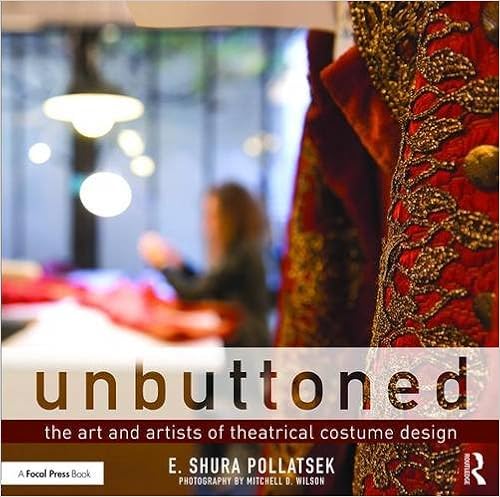
Unbuttoned

Unbuttoned: The Art and Artists of Theatrical Costume Design documents the creative journey of costume creation from concept to performance. Each chapter provides an overview of the process, including designing and shopping; draping, cutting, dyeing, and painting; and beading, sewing, and creating embellishments and accessories. This book features interviews with practitioners from Broadway and regional theatres to opera and ballet companies, offering valuable insights into the costume design profession. Exceptional behind-the-scenes photography illustrates top costume designers and craftspeople at work, along with gorgeous costumes in progress.


UnSelfie

Bestselling author Michele Borba offers a 9-step program to help parents cultivate empathy in children, from birth to young adulthood—and explains why developing a healthy sense of empathy is a key predictor of which kids will thrive and succeed in the future.


Tuesday, January 17, 2017

VCard Machine - No Valid Accounts

With the new copier system if you run into the error "No Valid Accounts" on the VCard machine when a student tries to add money, it means they have not completed their PantherCash Registration Application yet. Take the student to the following website: https://app.gsu.edu/panthercash/

Once they have completed the form and hit submit, it will take about 15 minutes for their account to become activated. Once activated they should be able to add money to their card either through the VCard machine or online.

If you have any questions, please call the Card Center at x5480.

Friday, January 13, 2017

Default Printers on Student Computers

Students are getting confused because Dunspool on JACKSON doesn't appear as the top (or default) print destination. 

In order for JACKSON to be the default printer, the full start-up protocol needs to finish, which on our slow computers might take a long time. Until all start-up scripts have run, the default will be the Microsoft XPS Doc Writer.  That print destination goes no where. 

The solution for patient students is to wait for the start-up script to finish before trying to print.  Or impatient students can continue to go in and manually change the print destination. (Hopefully a more permanent solution of faster computers is one the way.)


LTC Hours

In case you missed it in the Daily Digest, here are the Dunwoody LTC hours for this semester:
Monday – Thursday 8:30am – 9:00pm
Friday 12:00pm – 5:00pm
Sunday 2:00pm- 5:45pm
The 8:30-10:00 am time is for studying and computer use. On some days tutors will also be available early; please advise students to check that schedule upstairs.